目前网上的
c++线程池资源多是使用老版本或者使用系统接口实现,使用c++ 11新特性的不多,最近研究了一下,实现一个简单版本,可实现任意任意参数函数的调用以及获得返回值。
首先介绍一下用到的c++新特性
问题0:线程运行完函数后自动就被系统回收了,怎么才能实现复用呢
答:刚开始我也是比较疑惑,以为有个什么状态方法可以调用,在线程结束被销毁前阻塞住,从而接取下一个任务,实现复用,其实并非如此,线程池实现的原理是,让线程执行一个死循环任务,当任务队列为空时,就让他阻塞防止资源浪费,当有任务时,解除阻塞,让线程向下执行,当执行完当前函数后,又会再次运行到死循环的的上方,继续向下执行,从而周而复始的不断接任务--完成任务--接任务的循环,这里可以设置一个变量来控制,当想销毁线程池的时候,让死循环不再成立,当该线程执行完当前函数后,退出循环,从而销毁线程,思路很精妙
问题1:传入的函数多种多样,怎么能实现一个统一调用的模式呢
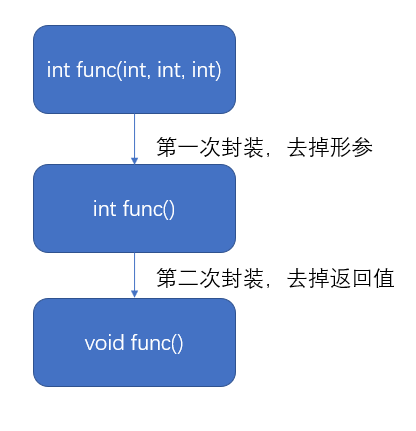
答:用过c++多线程的就应该知道,我们在创建线程时,需要给thread传递函数地址和参数,但是我们的任务参数是多种多样的,数量不一,这时候,我们就需要使用可变参数模板将函数经过两次封装,封装为统一格式,第一次封装,封装为不含有形参的函数,即参数绑定,但此时是有返回值的,第二次封装,将函数的返回值也去除,这样我们就能使用void()这种统一的形式去调用了。第一次封装我们使用bind()函数将多个参数的函数封装为没有形参的package_task对象,为什么呢,因为package_task对象可以通过get_future得到future对象,然后future对象可以通过get方法获取返回值,这样我们第二步,就能直接把返回值也去掉了。
说了这么多,有点绕,对于没怎么使用过新特性的同学来说,可能云雾缭绕,其实真正想明白这两个问题,线程池的理论问题就解决了
总共包含5个文件,两个头文件,3个源文件,
这两个文件是实现任务队列的,其实很简单,两个方法,一个放入任务,一个取出任务,放入任务就放我们封装后的
/** Created by Jiale on 2022/3/14 10:19. * Decryption: 任务队列头文件**/#ifndef THREADPOOL_TASKQUEUE_H#define THREADPOOL_TASKQUEUE_H#include <queue>#include <functional>#include <mutex>#include <future>#include <iostream>class TaskQueue {public: using Task = std::function<void()>; // 任务类 template<typename F, typename ...Args> auto addTask(F &f, Args &&...args) -> std::future<decltype(f(args...))>; // 添加任务 Task takeTask(); // 取任务 bool empty() {return taskQueue.empty();}private: std::mutex taskQueueMutex; // 任务队列互斥锁 std::queue<Task> taskQueue; // 任务队列};template <typename F, typename ...Args> // 可变参数模板,模板必须在头文件定义auto TaskQueue::addTask(F &f, Args &&...args)-> std::future<decltype(f(args...))> { using RetType = decltype(f(args...)); // 获取函数返回值类型 // 将函数封装为无形参的类型 std::bind(f, std::forward<Args>(args)...):将参数与函数名绑定 // packaged_task<RetType()>(std::bind(f, std::forward<Args>(args)...)); 将绑定参数后的函数封装为只有返回值没有形参的任务对象,这样就能使用get_future得到future对象,然后future对象可以通过get方法获取返回值了 // std::make_shared<std::packaged_task<RetType()>>(std::bind(f, std::forward<Args>(args)...)); 生成智能指针,离开作用域自动析构 auto task = std::make_shared<std::packaged_task<RetType()>>(std::bind(f, std::forward<Args>(args)...)); std::lock_guard<std::mutex> lockGuard(taskQueueMutex); // 插入时上锁,防止多个线程同时插入 // 将函数封装为无返回无形参类型,通过lamdba表达式,调用封装后的函数,注意,此时返回一个无形参无返回值的函数对象 taskQueue.emplace([task]{(*task)();}); return task->get_future();}#endif //THREADPOOL_TASKQUEUE_H/** Created by Jiale on 2022/3/14 10:19. * Decryption: 任务队列源文件**/#include "include/TaskQueue.h"/** * 从任务队列中取任务 * @return 取出的任务 */TaskQueue::Task TaskQueue::takeTask() { Task task; std::lock_guard<std::mutex> lockGuard(taskQueueMutex); // 上锁 if (!taskQueue.empty()) { task = std::move(taskQueue.front()); // 取出任务 taskQueue.pop(); // 将任务从队列中删除 return task; } return nullptr;}可以看出,代码不多,就是一个简单的放入任务,取出任务,但是如果没接触过这种写法的时候还是比较难想的,我把那句难理解的代码拆成三部分
/** Created by Jiale on 2022/3/14 10:42. * Decryption: 线程池头文件**/#ifndef THREADPOOL_THREADPOOL_H#define THREADPOOL_THREADPOOL_H#include <atomic>#include <thread>#include <condition_variable>#include "TaskQueue.h"class ThreadPool { std::atomic<int> threadNum{}; // 最小线程数 std::atomic<int> busyThreadNum; // 忙线程数 std::condition_variable notEmptyCondVar; // 判断任务队列是否非空 std::mutex threadPoolMutex; // 线程池互斥锁 bool shutdown; // 线程池是否启动 std::unique_ptr<TaskQueue> taskQueue; // 任务队列 std::vector<std::shared_ptr<std::thread>> threadVec; // 线程池public: explicit ThreadPool(int threadNum = 5); // 创建线程池 ~ThreadPool(); // 销毁线程池 template <typename F, typename ...Args> auto commit(F &f, Args &&...args) -> decltype(taskQueue->addTask(f, std::forward<Args>(args)...)); // 提交一个任务 void worker();};template <typename F, typename ...Args> // 可变参数模板auto ThreadPool::commit(F &f, Args &&...args) -> decltype(taskQueue->addTask(f, std::forward<Args>(args)...)){ // 这个目的就是把接收的参数直接转发给我们上面写的addTask方法,这样,就可以对使用者隐藏TaskQueue的细节,只向用户暴露ThreadPool就行 auto ret = taskQueue->addTask(f, std::forward<Args>(args)...); notEmptyCondVar.notify_one(); return ret;}#endif //THREADPOOL_THREADPOOL_H/** Created by Jiale on 2022/3/14 10:42. * Decryption:线程池源文件**/#include "include/ThreadPool.h"ThreadPool::ThreadPool(int threadNum) : taskQueue(std::make_unique<TaskQueue>()), shutdown(false), busyThreadNum(0) { this->threadNum.store(threadNum); for (int i = 0; i < this->threadNum; ++i) { threadVec.push_back(std::make_shared<std::thread>(&ThreadPool::worker, this)); // 创建线程 threadVec.back()->detach(); // 创建线程后detach,与主线程脱离 }}ThreadPool::~ThreadPool() { shutdown = true; // 等待线程执行完,就不在去队列取任务}void ThreadPool::worker() { while (!shutdown) { std::unique_lock<std::mutex> uniqueLock(threadPoolMutex); notEmptyCondVar.wait(uniqueLock, [this] { return !taskQueue->empty() || shutdown; }); // 任务队列为空,阻塞在此,当任务队列不是空或者线程池关闭时,向下执行 auto currTask = std::move(taskQueue->takeTask()); // 取出任务 uniqueLock.unlock(); ++busyThreadNum; currTask(); // 执行任务 --busyThreadNum; }}线程池设计好了,我们进行测试,如果我们开5个子线程,处理20个任务,那么,应该有5个线程ID,且是5个线程并发执行的,我们在测试函数里睡眠2秒,那么,总的时间应该是8秒执行完
#include <iostream>#include <thread>#include <future>#include "ThreadPool.h"using namespace std;mutex mut;int func(int x) { auto now = time(nullptr); auto dateTime = localtime(&now); mut.lock(); // 为了防止打印错乱,我们在这里加锁 cout << "任务编号:" << x <<" 执行线程ID: " << this_thread::get_id() << " 当前时间: " << dateTime->tm_min << ":" << dateTime->tm_sec << endl; mut.unlock(); this_thread::sleep_for(2s); return x;}int main() { ThreadPool threadPool; for (int i = 0; i < 20; ++i) auto ret = threadPool.commit(func, i); this_thread::sleep_for(20s); // 主线程等待,因为现在子线程是脱离状态,如果主线程关闭,则看不到打印}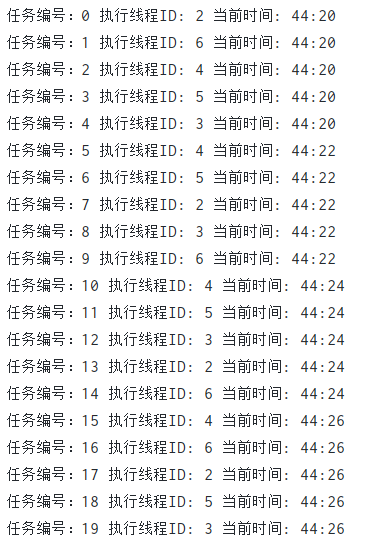
可以看到我们的线程是并发执行的,总共用时从44分20秒,到44分26秒,总共6秒,加上我们最后一次打印没有停留2秒,总共是8秒,每次打印的线程号也相同,可以看出,我们实现了线程的复用
这只是多线程的一个简单实现,很多东西没有考虑到,比如任务超时,任务优先级等,当然,我们会了简单的之后就能慢慢摸索更复杂的功能。感谢阅读