sqlSession简单介绍
- 拿到SqlSessionFactory对象后,会调用SqlSessionFactory的openSesison方法,这个方法会创建一个Sql执行器(Executor),这个Sql执行器会代理你配置的拦截器方法。
- 获得上面的Sql执行器后,会创建一个SqlSession(默认使用DefaultSqlSession),这个SqlSession中也包含了Configration对象,所以通过SqlSession也能拿到全局配置;
- 获得SqlSession对象后就能执行各种CRUD方法了。
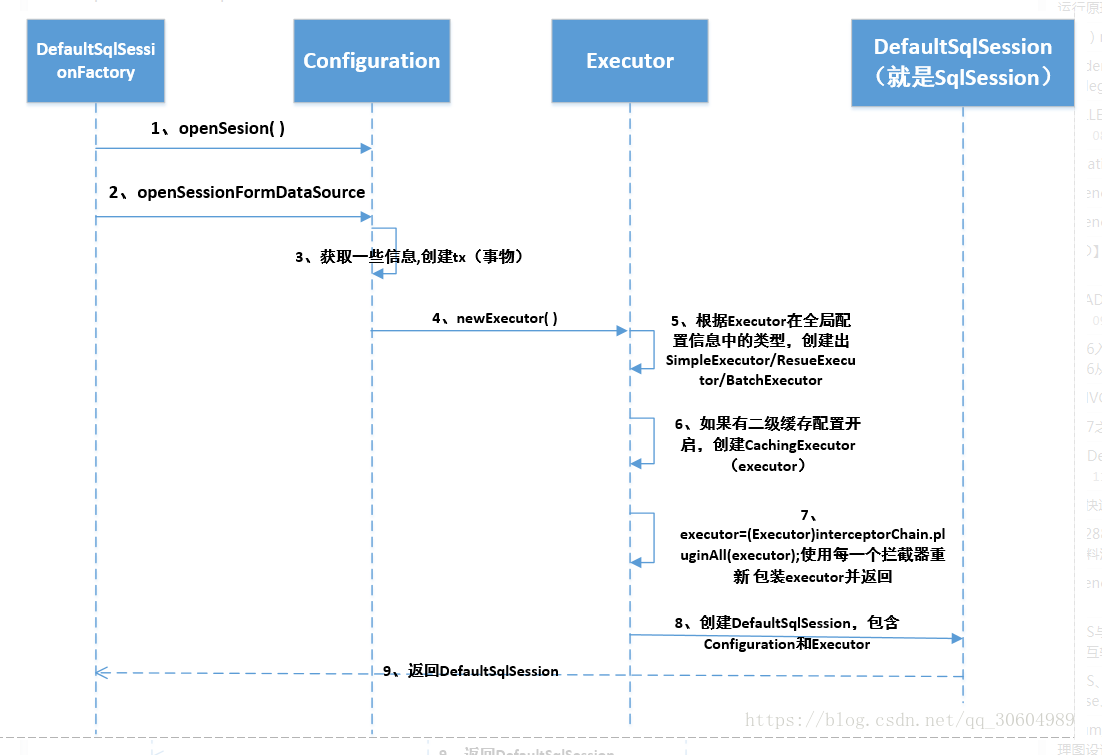
获得sqlSession对象源码分析
/** * 通过sqlSessionFactory.openSession进行获取sqlSession对象 * 源码位置:org.apache.ibatis.session.defaults.DefaultSqlSessionFactory.openSession() */public SqlSession openSession() { return openSessionFromDataSource(configuration.getDefaultExecutorType(), null, false);}/** * 通过数据源去获取SqlSession * 源码位置:org.apache.ibatis.session.defaults.DefaultSqlSessionFactory.openSessionFromDataSource(ExecutorType, TransactionIsolationLevel, boolean) */private SqlSession openSessionFromDataSource(ExecutorType execType, TransactionIsolationLevel level, boolean autoCommit) { Transaction tx = null; try { // 获取环境变量 final Environment environment = configuration.getEnvironment(); // 获取事务工厂 final TransactionFactory transactionFactory = getTransactionFactoryFromEnvironment(environment); // 获取一个事务 tx = transactionFactory.newTransaction(environment.getDataSource(), level, autoCommit); // 获取执行器,这边获得的执行器已经代理拦截器的功能 final Executor executor = configuration.newExecutor(tx, execType); // 根据获取的执行器创建SqlSession return new DefaultSqlSession(configuration, executor, autoCommit); } catch (Exception e) { closeTransaction(tx); // may have fetched a connection so lets call close() throw ExceptionFactory.wrapException("Error opening session. Cause: " + e, e); } finally { ErrorContext.instance().reset(); }}/** * 获取执行器 * 源码位置:org.apache.ibatis.session.defaults.DefaultSqlSessionFactory.openSessionFromDataSource(ExecutorType, TransactionIsolationLevel, boolean) */public Executor newExecutor(Transaction transaction, ExecutorType executorType) { // 默认使用SIMPLE的执行器 executorType = executorType == null ? defaultExecutorType : executorType; executorType = executorType == null ? ExecutorType.SIMPLE : executorType; Executor executor; if (ExecutorType.BATCH == executorType) { // 批量的执行器 executor = new BatchExecutor(this, transaction); } else if (ExecutorType.REUSE == executorType) { // 可重复使用的执行器 executor = new ReuseExecutor(this, transaction); } else { // 简单的sql执行器 executor = new SimpleExecutor(this, transaction); } // 判断Mybatis的全局配置文件是否开启二级缓存 if (cacheEnabled) { // 开启缓存,吧executor包装为CachingExecutor executor = new CachingExecutor(executor); } // 插件的调用:责任链模式 executor = (Executor) interceptorChain.pluginAll(executor); return executor;}
SQL执行流程,以查询为例
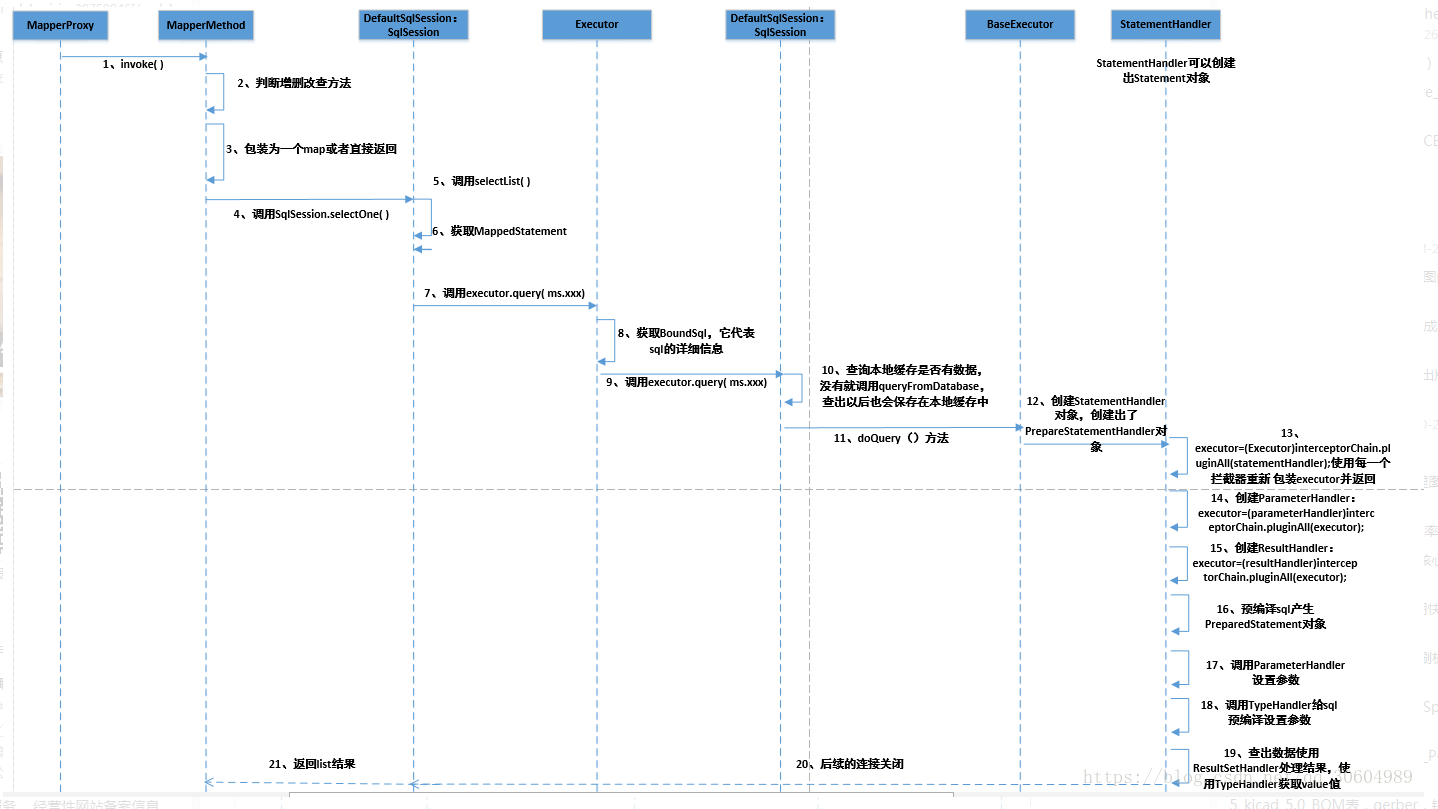
/** * 查询的入口方法 * 源码位置:org.apache.ibatis.session.defaults.DefaultSqlSession.selectOne(String, Object) */public <T> T selectOne(String statement, Object parameter) { // Popular vote was to return null on 0 results and throw exception on too many. // 查询数据 List<T> list = this.<T>selectList(statement, parameter); // 长度为1,拿第一个 if (list.size() == 1) { return list.get(0); } else if (list.size() > 1) { // 长度大于一,抛异常 throw new TooManyResultsException( "Expected one result (or null) to be returned by selectOne(), but found: " + list.size()); } else { // 没有拿到返回null return null; }}/** * 查询数据 * 源码位置:org.apache.ibatis.session.defaults.DefaultSqlSession.selectList(String, Object, RowBounds) */public <E> List<E> selectList(String statement, Object parameter, RowBounds rowBounds) { try { // 通过statement去全局配置文件中获取MappedStatement(得到mapper中增删改查的节点) MappedStatement ms = configuration.getMappedStatement(statement); // 通过执行器去执行SQL return executor.query(ms, wrapCollection(parameter), rowBounds, Executor.NO_RESULT_HANDLER); } catch (Exception e) { throw ExceptionFactory.wrapException("Error querying database. Cause: " + e, e); } finally { ErrorContext.instance().reset(); }}/** * 执行查询操作的准备工作 * 源码位置:org.apache.ibatis.executor.CachingExecutor.query(MappedStatement, Object, RowBounds, ResultHandler) */public <E> List<E> query(MappedStatement ms, Object parameterObject, RowBounds rowBounds, ResultHandler resultHandler) throws SQLException { // 通过参数进行sql解析 BoundSql boundSql = ms.getBoundSql(parameterObject); CacheKey key = createCacheKey(ms, parameterObject, rowBounds, boundSql); return query(ms, parameterObject, rowBounds, resultHandler, key, boundSql);}/** * 执行查询操作的准备工作 * 源码位置:org.apache.ibatis.executor.CachingExecutor.query(MappedStatement, Object, RowBounds, ResultHandler, CacheKey, BoundSql) */public <E> List<E> query(MappedStatement ms, Object parameterObject, RowBounds rowBounds, ResultHandler resultHandler, CacheKey key, BoundSql boundSql) throws SQLException { // 判断sql是否开启了缓存 <cache></cache> Cache cache = ms.getCache(); // 有缓存 if (cache != null) { // 判断是否需要刷新缓存 flushCacheIfRequired(ms); if (ms.isUseCache() && resultHandler == null) { ensureNoOutParams(ms, boundSql); @SuppressWarnings("unchecked") // 去二级缓存中获取(装饰者模式) List<E> list = (List<E>) tcm.getObject(cache, key); // 二级缓存没有找到 if (list == null) { // 查询数据,并放入缓存 list = delegate.<E>query(ms, parameterObject, rowBounds, resultHandler, key, boundSql); tcm.putObject(cache, key, list); // issue #578 and #116 } return list; } } // 查询数据 return delegate.<E>query(ms, parameterObject, rowBounds, resultHandler, key, boundSql);}/** * 一级缓存查询的调用 * 源码位置:org.apache.ibatis.executor.BaseExecutor.query(MappedStatement, Object, RowBounds, ResultHandler, CacheKey, BoundSql) */public <E> List<E> query(MappedStatement ms, Object parameter, RowBounds rowBounds, ResultHandler resultHandler, CacheKey key, BoundSql boundSql) throws SQLException { ErrorContext.instance().resource(ms.getResource()).activity("executing a query").object(ms.getId()); // 已经关闭了,抛异常 if (closed) { throw new ExecutorException("Executor was closed."); } // 清空本地缓存 if (queryStack == 0 && ms.isFlushCacheRequired()) { clearLocalCache(); } List<E> list; try { // 从一级缓存中获取数据 queryStack++; list = resultHandler == null ? (List<E>) localCache.getObject(key) : null; if (list != null) { // 缓存里面有,进行处理 handleLocallyCachedOutputParameters(ms, key, parameter, boundSql); } else { // 缓存没有,进行查询 list = queryFromDatabase(ms, parameter, rowBounds, resultHandler, key, boundSql); } } finally { queryStack--; } if (queryStack == 0) { for (DeferredLoad deferredLoad : deferredLoads) { deferredLoad.load(); } // issue #601 deferredLoads.clear(); if (configuration.getLocalCacheScope() == LocalCacheScope.STATEMENT) { // issue #482 clearLocalCache(); } } return list;}/** * 在数据库中查询 * 源码位置:org.apache.ibatis.executor.BaseExecutor.queryFromDatabase(MappedStatement, Object, RowBounds, ResultHandler, CacheKey, BoundSql) */private <E> List<E> queryFromDatabase(MappedStatement ms, Object parameter, RowBounds rowBounds, ResultHandler resultHandler, CacheKey key, BoundSql boundSql) throws SQLException { List<E> list; localCache.putObject(key, EXECUTION_PLACEHOLDER); try { // 去数据库查询 list = doQuery(ms, parameter, rowBounds, resultHandler, boundSql); } finally { localCache.removeObject(key); } // 一级缓存进行缓存 localCache.putObject(key, list); if (ms.getStatementType() == StatementType.CALLABLE) { localOutputParameterCache.putObject(key, parameter); } return list;}/** * 查询逻辑 * 源码位置:org.apache.ibatis.executor.SimpleExecutor.doQuery(MappedStatement, Object, RowBounds, ResultHandler, BoundSql) */public <E> List<E> doQuery(MappedStatement ms, Object parameter, RowBounds rowBounds, ResultHandler resultHandler, BoundSql boundSql) throws SQLException { Statement stmt = null; try { // 得到整体的配置对象 Configuration configuration = ms.getConfiguration(); // 内部封装了ParameterHandler和ResultSetHandler StatementHandler handler = configuration.newStatementHandler(wrapper, ms, parameter, rowBounds, resultHandler, boundSql); stmt = prepareStatement(handler, ms.getStatementLog()); // 执行查询 return handler.<E>query(stmt, resultHandler); } finally { closeStatement(stmt); }}/** * 执行查询语句 * 源码位置:org.apache.ibatis.executor.statement.SimpleStatementHandler.query(Statement, ResultHandler) */public <E> List<E> query(Statement statement, ResultHandler resultHandler) throws SQLException { // 得到要执行的sql String sql = boundSql.getSql(); // 执行sql statement.execute(sql); // 处理结果集 return resultSetHandler.<E>handleResultSets(statement);}
结束语
- 获取更多本文的前置知识文章,以及新的有价值的文章,让我们一起成为架构师!
- 目前已经完成了并发编程、MySQL、spring源码、Mybatis的源码。可以在公众号下方菜单点击查看之前的文章!
- 接下来的目标是深入分析JVM、tomcat、redis
- 这个公众号,无广告!!!每日更新!!!