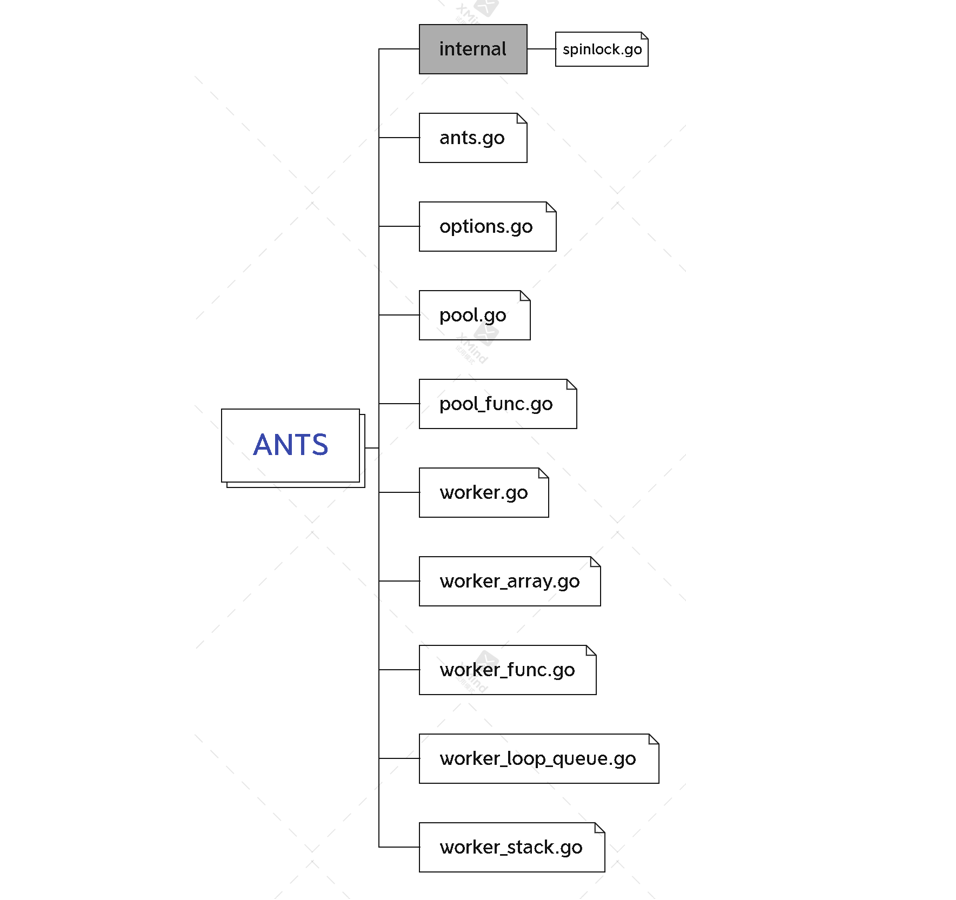
poolwithfunc与pool相差不大,这里我们只分析ants默认pool的流程
| 文件 | 作用 |
|---|---|
| ants.go | 定义常量、errors显示、默认建一个大小为2147483647的goroutine池、封装一些方便用户操作查看goroutine池的函数 |
| options.go | goroutine池的相关配置 |
| pool.go | 普通pool(不绑定特定函数)的创建以及对pool相关的操作 |
| pool_func.go | 创建绑定某个特定函数的pool以及对pool相关的操作 |
| worker.go | goworker的struct(其他语言中的类)、run(其他语言中的方法) |
| worker_array.go | 一个worker_array的接口和一个能返回实现该接口的函数 |
| worker_func.go | 略 |
| worker_loop_queue.go | 略 |
| worker_stack.go | workerStack(struct)实现worker_array中的所有接口 |
| spinlock.go | 锁相关 |
type Pool struct { capacity int32 // 容量 running int32 // 正在运行的数量 lock sync.Locker //定义一个锁 用以支持 Pool 的同步操作 workers workerArray // workers 一个接口 存放可循环利用的Work(goroutine)的相关信息 // type workerArray interface { // len() int // isEmpty() bool // insert(worker *goWorker) error // detach() *goWorker // retrieveExpiry(duration time.Duration) []*goWorker // reset() // } state int32 //记录池子的状态(关闭,开启) cond *sync.Cond // 条件变量 workerCache sync.Pool // golang原始池子 使用sync.Pool对象池管理和创建worker对象,提升性能 blockingNum int // 阻塞等待的任务数量; stopHeartbeat chan struct{} //一个空结构体的通道,仅用于接收标志 options *Options // 用于配置pool的options指针}type workerArray interface { len() int // worker的数量 isEmpty() bool // worker是否为0 insert(worker *goWorker) error //将执行完的worker(goroutine)放回 detach() *goWorker // 获取worker retrieveExpiry(duration time.Duration) []*goWorker //取出所有的过期 worker; reset() // 重置}type workerStack struct { items []*goWorker //空闲的worker expiry []*goWorker //过期的worker size int}下面是对接口workerArray的实现
func (wq *workerStack) len() int { return len(wq.items)}func (wq *workerStack) isEmpty() bool { return len(wq.items) == 0}func (wq *workerStack) insert(worker *goWorker) error { wq.items = append(wq.items, worker) return nil}//返回items中最后一个workerfunc (wq *workerStack) detach() *goWorker { l := wq.len() if l == 0 { return nil } w := wq.items[l-1] wq.items[l-1] = nil // avoid memory leaks wq.items = wq.items[:l-1] return w}func (wq *workerStack) retrieveExpiry(duration time.Duration) []*goWorker { n := wq.len() if n == 0 { return nil } expiryTime := time.Now().Add(-duration) //过期时间=现在的时间-1s index := wq.binarySearch(0, n-1, expiryTime) wq.expiry = wq.expiry[:0] if index != -1 { wq.expiry = append(wq.expiry, wq.items[:index+1]...) //因为以后进先出的模式去worker 所有过期的woker这样wq.items[:index+1]取 m := copy(wq.items, wq.items[index+1:]) for i := m; i < n; i++ { //m是存活的数量 下标为m之后的元素全部置为nil wq.items[i] = nil } wq.items = wq.items[:m] //抹除后面多余的内容 } return wq.expiry}// 二分法查询过期的workerfunc (wq *workerStack) binarySearch(l, r int, expiryTime time.Time) int { var mid int for l <= r { mid = (l + r) / 2 if expiryTime.Before(wq.items[mid].recycleTime) { r = mid - 1 } else { l = mid + 1 } } return r}func (wq *workerStack) reset() { for i := 0; i < wq.len(); i++ { wq.items[i].task <- nil //worker的任务置为nil wq.items[i] = nil //worker置为nil } wq.items = wq.items[:0] //items置0}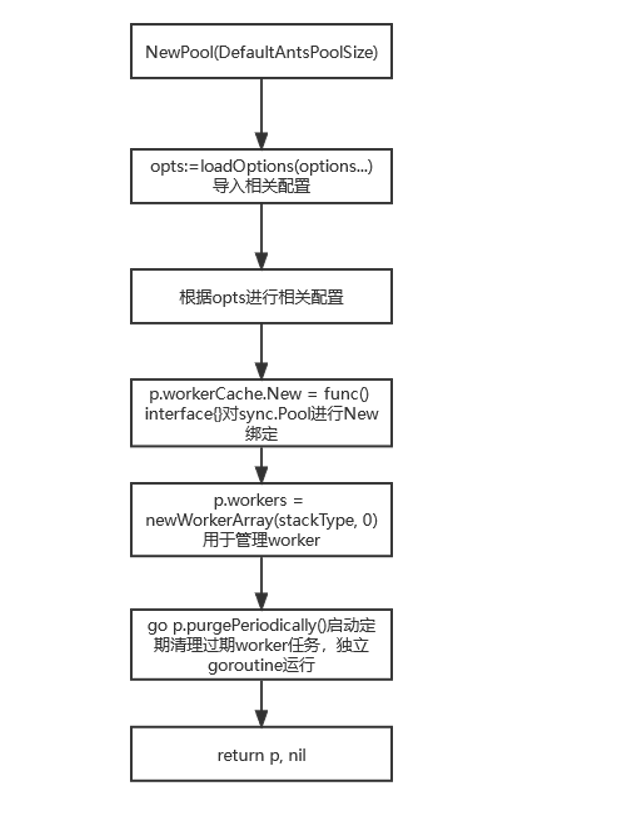
func NewPool(size int, options ...Option) (*Pool, error) { opts := loadOptions(options...) // 导入配置 根据不同项进行配置此处省略 p := &Pool{ capacity: int32(size), lock: internal.NewSpinLock(), stopHeartbeat: make(chan struct{}, 1), //开一个通道用于接收一个停止标志 options: opts, } p.workerCache.New = func() interface{} { return &goWorker{ pool: p, task: make(chan func(), workerChanCap), } } p.workers = newWorkerArray(stackType, 0) p.cond = sync.NewCond(p.lock) go p.purgePeriodically() return p, nil}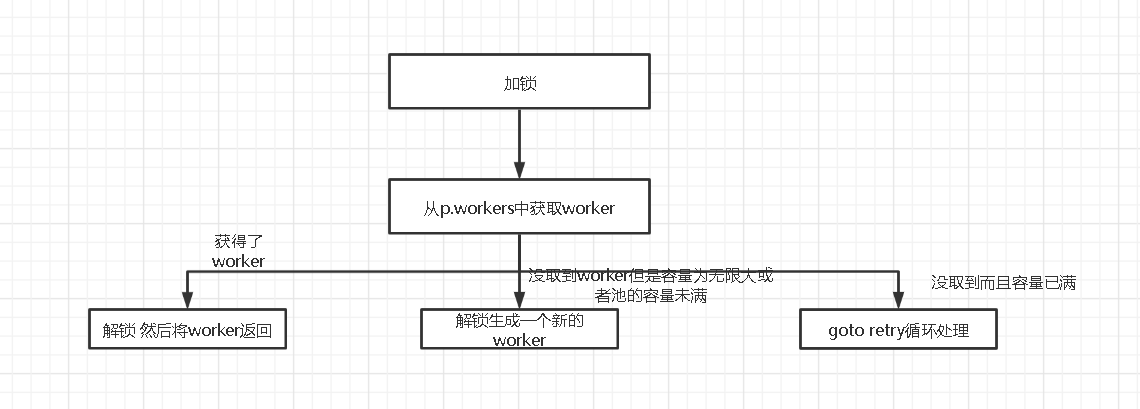
func (p *Pool) retrieveWorker() (w *goWorker) { spawnWorker := func() { w = p.workerCache.Get().(*goWorker) w.run() } p.lock.Lock() w = p.workers.detach() // 获取列表中最后一个worker if w != nil { // 取出来的话直接解锁 p.lock.Unlock() } else if capacity := p.Cap(); capacity == -1 || capacity > p.Running() { //没取到但是容量为无限大或者容量未满 p.lock.Unlock() spawnWorker() //开一个新的worker } else { // 没取到 而且容量已经满了 if p.options.Nonblocking { //默认为False p.lock.Unlock() return } retry: xxxx goto retry xxxx p.lock.Unlock() } return}func (w *goWorker) run() { w.pool.incRunning() //增加正在运行的worker数量 go func() { defer func() { w.pool.decRunning() w.pool.workerCache.Put(w) if p := recover(); p != nil { if ph := w.pool.options.PanicHandler; ph != nil { ph(p) } else { w.pool.options.Logger.Printf("worker exits from a panic: %v\n", p) var buf [4096]byte n := runtime.Stack(buf[:], false) w.pool.options.Logger.Printf("worker exits from panic: %s\n", string(buf[:n])) } } // Call Signal() here in case there are goroutines waiting for available workers. w.pool.cond.Signal() }() for f := range w.task { //阻塞接受task if f == nil { return } f() //执行函数 if ok := w.pool.revertWorker(w); !ok { // 将goworker放回items中 return } } }()}